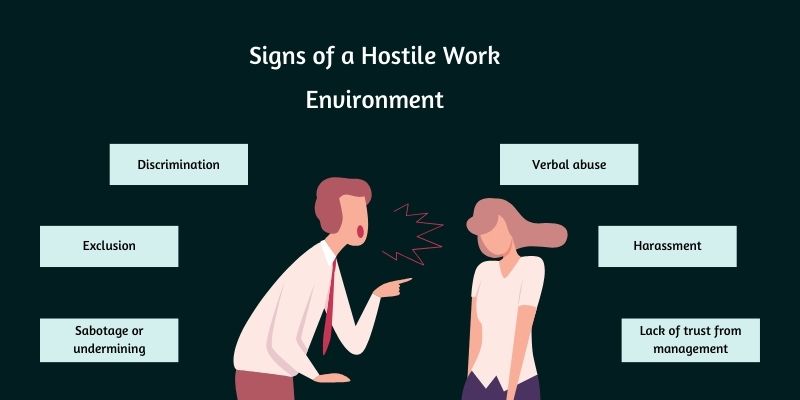
A hostile work environment exists when the conduct of one or more employees, supervisors, or non-employees (such as clients or customers) creates an intimidating, hostile, or offensive working environment for another employee. Harassing conduct does not have to be directed at the employee; it may occur between other employees and affect the employee’s work environment.
Examples of hostile work environment include:
- Verbal or physical conduct that is intimidating, hostile, or offensive
- Creating a hostile work environment by making threats or engaging in verbal or physical abuse
- Displaying offensive or sexually explicit pictures or objects
- Making offensive or derogatory jokes or comments
- Unwelcome sexual advances or requests for sexual favors
- Creating a hostile work environment by interfering with an employee’s work performance
- Retaliating against an employee who reports harassment
A hostile work environment can have a negative impact on an employee’s productivity, morale, and health. It can also lead to absenteeism, turnover, and even legal liability for the employer. Employers are required to take steps to prevent and correct hostile work environments. This includes investigating complaints of harassment, taking disciplinary action against employees who engage in harassment, and providing training on harassment prevention.
If you believe that you are working in a hostile work environment, you should report it to your supervisor or human resources department. You may also file a complaint with the Equal Employment Opportunity Commission (EEOC).
1. Verbal or physical conduct that is intimidating, hostile, or offensive
Verbal or physical conduct that is intimidating, hostile, or offensive is a common example of a hostile work environment. This type of conduct can create a hostile work environment even if it is not directed at a specific employee. For example, if an employee is subjected to offensive jokes or comments, or if they are threatened or physically intimidated by a coworker, this could create a hostile work environment even if the conduct is not directed at them specifically.
Verbal or physical conduct that is intimidating, hostile, or offensive can have a negative impact on an employee’s productivity, morale, and health. It can also lead to absenteeism, turnover, and even legal liability for the employer. Employers are required to take steps to prevent and correct hostile work environments. This includes investigating complaints of harassment, taking disciplinary action against employees who engage in harassment, and providing training on harassment prevention.
If you believe that you are working in a hostile work environment, you should report it to your supervisor or human resources department. You may also file a complaint with the Equal Employment Opportunity Commission (EEOC).
2. Displaying offensive or sexually explicit pictures or objects
Displaying offensive or sexually explicit pictures or objects is a form of harassment that can create a hostile work environment. This type of conduct can be particularly intimidating or offensive to employees who are the target of the harassment, but it can also create a hostile work environment for other employees who are exposed to the offensive material.
-
Facet 1: The impact on employees
Displaying offensive or sexually explicit pictures or objects can have a negative impact on employees’ productivity, morale, and health. It can also lead to absenteeism, turnover, and even legal liability for the employer. Employees who are exposed to this type of harassment may feel uncomfortable, embarrassed, or even threatened. They may also be less likely to report the harassment to their supervisor or human resources department for fear of retaliation.
-
Facet 2: The employer’s responsibility
Employers are required to take steps to prevent and correct hostile work environments. This includes investigating complaints of harassment, taking disciplinary action against employees who engage in harassment, and providing training on harassment prevention. Employers who fail to take these steps may be held liable for creating or allowing a hostile work environment.
-
Facet 3: Examples
Examples of displaying offensive or sexually explicit pictures or objects in the workplace include:
- Posting sexually explicit pictures or videos on a computer or bulletin board
- Displaying offensive or sexually explicit objects, such as dildos or vibrators, in the workplace
- Making sexually explicit jokes or comments to coworkers
- Touching or groping coworkers in a sexual manner
-
Facet 4: Legal implications
Displaying offensive or sexually explicit pictures or objects in the workplace can lead to legal liability for the employer. Employees who are harassed in this way may file a complaint with the Equal Employment Opportunity Commission (EEOC) or file a lawsuit against their employer.
Displaying offensive or sexually explicit pictures or objects is a serious form of harassment that can create a hostile work environment. Employers are required to take steps to prevent and correct this type of conduct. Employees who are harassed in this way should report it to their supervisor or human resources department and may also file a complaint with the EEOC.
3. Making offensive or derogatory jokes or comments
Making offensive or derogatory jokes or comments is a common example of a hostile work environment. This type of conduct can create a hostile work environment even if it is not directed at a specific employee. For example, if an employee is subjected to offensive jokes or comments about their race, gender, religion, or sexual orientation, this could create a hostile work environment even if the jokes or comments are not directed at them specifically.
Making offensive or derogatory jokes or comments can have a negative impact on an employee’s productivity, morale, and health. It can also lead to absenteeism, turnover, and even legal liability for the employer. Employees who are exposed to this type of harassment may feel uncomfortable, embarrassed, or even threatened. They may also be less likely to report the harassment to their supervisor or human resources department for fear of retaliation.
Employers are required to take steps to prevent and correct hostile work environments. This includes investigating complaints of harassment, taking disciplinary action against employees who engage in harassment, and providing training on harassment prevention. Employers who fail to take these steps may be held liable for creating or allowing a hostile work environment.
If you believe that you are working in a hostile work environment, you should report it to your supervisor or human resources department. You may also file a complaint with the Equal Employment Opportunity Commission (EEOC).
4. Unwelcome sexual advances or requests for sexual favors
Unwelcome sexual advances or requests for sexual favors are a form of sexual harassment that can create a hostile work environment. This type of conduct can be particularly intimidating or offensive to employees who are the target of the harassment, but it can also create a hostile work environment for other employees who are exposed to the conduct.
Unwelcome sexual advances or requests for sexual favors can take many forms, including:
- Verbal comments or jokes of a sexual nature
- Physical touching or groping
- Requests for sexual favors in exchange for job benefits
- Threats of retaliation if sexual favors are not granted
Unwelcome sexual advances or requests for sexual favors can have a negative impact on an employee’s productivity, morale, and health. It can also lead to absenteeism, turnover, and even legal liability for the employer. Employees who are subjected to this type of harassment may feel uncomfortable, embarrassed, or even threatened. They may also be less likely to report the harassment to their supervisor or human resources department for fear of retaliation.
Employers are required to take steps to prevent and correct hostile work environments. This includes investigating complaints of harassment, taking disciplinary action against employees who engage in harassment, and providing training on harassment prevention. Employers who fail to take these steps may be held liable for creating or allowing a hostile work environment.
If you believe that you are working in a hostile work environment, you should report it to your supervisor or human resources department. You may also file a complaint with the Equal Employment Opportunity Commission (EEOC).
5. Interfering with an employee’s work performance
Interfering with an employee’s work performance is a serious form of harassment that can create a hostile work environment. This type of conduct can take many forms, including:
- Preventing an employee from completing their work
- Sabotaging an employee’s work
- Making it difficult for an employee to do their job
- Threatening an employee if they do not cooperate
Interfering with an employee’s work performance can have a negative impact on the employee’s productivity, morale, and health. It can also lead to absenteeism, turnover, and even legal liability for the employer. Employees who are subjected to this type of harassment may feel frustrated, stressed, and anxious. They may also be less likely to report the harassment to their supervisor or human resources department for fear of retaliation.
Employers are required to take steps to prevent and correct hostile work environments. This includes investigating complaints of harassment, taking disciplinary action against employees who engage in harassment, and providing training on harassment prevention. Employers who fail to take these steps may be held liable for creating or allowing a hostile work environment.
If you believe that you are working in a hostile work environment, you should report it to your supervisor or human resources department. You may also file a complaint with the Equal Employment Opportunity Commission (EEOC).
6. Retaliating against an employee who reports harassment
Retaliating against an employee who reports harassment is a serious form of workplace retaliation and a clear violation of federal law. It can create a hostile work environment and deter other employees from reporting harassment. Retaliation can take many forms, including:
- Demoting or firing the employee
- Denying the employee opportunities for promotion or training
- Changing the employee’s job duties or responsibilities
- Harassing or intimidating the employee
- Creating a hostile work environment
Retaliation against an employee who reports harassment can have a devastating impact on the employee’s career and mental health. It can also create a culture of fear and silence in the workplace, which can make it difficult for other employees to come forward and report harassment.
Employers are required to take steps to prevent and correct retaliation against employees who report harassment. This includes investigating complaints of retaliation, taking disciplinary action against employees who engage in retaliation, and providing training on retaliation prevention. Employers who fail to take these steps may be held liable for creating or allowing a hostile work environment.
If you believe that you have been retaliated against for reporting harassment, you should report it to your supervisor or human resources department. You may also file a complaint with the Equal Employment Opportunity Commission (EEOC).
FAQs About Hostile Work Environment
A hostile work environment exists when the conduct of one or more employees, supervisors, or non-employees (such as clients or customers) creates an intimidating, hostile, or offensive working environment for another employee.
Question 1: What are some examples of hostile work environment?
Examples of hostile work environment can include verbal or physical conduct that is intimidating, hostile, or offensive; displaying offensive or sexually explicit pictures or objects; making offensive or derogatory jokes or comments; unwelcome sexual advances or requests for sexual favors; interfering with an employee’s work performance; and retaliating against an employee who reports harassment.
Question 2: What are the effects of a hostile work environment?
A hostile work environment can have negative effects on an employee’s productivity, morale, and health. It can also lead to absenteeism, turnover, and even legal liability for the employer.
Question 3: What should I do if I believe I am working in a hostile work environment?
If you believe that you are working in a hostile work environment, you should report it to your supervisor or human resources department. You may also file a complaint with the Equal Employment Opportunity Commission (EEOC).
Question 4: What are the employer’s responsibilities in preventing and correcting hostile work environments?
Employers are required to take steps to prevent and correct hostile work environments. This includes investigating complaints of harassment, taking disciplinary action against employees who engage in harassment, and providing training on harassment prevention.
Question 5: What is retaliation, and how can it relate to a hostile work environment?
Retaliation is taking an adverse action against an employee who reports harassment or participates in an investigation or proceeding related to harassment. It can create a hostile work environment and deter other employees from reporting harassment.
Question 6: Where can I get more information about hostile work environments?
You can get more information about hostile work environments from the Equal Employment Opportunity Commission (EEOC) website or by contacting your local EEOC office.
It is important to remember that hostile work environments are illegal, and employers are required to take steps to prevent and correct them. If you believe that you are working in a hostile work environment, you should report it to your supervisor or human resources department. You may also file a complaint with the Equal Employment Opportunity Commission (EEOC).
Tips to Prevent Hostile Work Environments
A hostile work environment can have a negative impact on employees’ productivity, morale, and health. It can also lead to absenteeism, turnover, and even legal liability for the employer. Employers are required to take steps to prevent and correct hostile work environments. Here are a few tips to help employers prevent hostile work environments:
Tip 1: Create a clear and concise anti-harassment policy.The policy should define what constitutes harassment, provide examples of prohibited conduct, and outline the steps employees should take if they experience or witness harassment.Tip 2: Communicate the anti-harassment policy to all employees.Make sure all employees are aware of the policy and understand their rights and responsibilities. Provide training on the policy and on how to prevent and respond to harassment.Tip 3: Investigate all complaints of harassment promptly and thoroughly.Take all complaints of harassment seriously and investigate them promptly and thoroughly. Protect the confidentiality of the parties involved and take appropriate disciplinary action against employees who engage in harassment.Tip 4: Provide a supportive work environment.Create a work environment where employees feel comfortable reporting harassment and where they are confident that their complaints will be taken seriously. Encourage employees to speak up if they see or experience harassment.Tip 5: Take steps to prevent retaliation.Retaliation against employees who report harassment is illegal. Take steps to prevent retaliation by providing training on retaliation prevention and by promptly and thoroughly investigating any complaints of retaliation.Tip 6: Regularly review and update your anti-harassment policy and training.Make sure your anti-harassment policy and training are up-to-date and reflect current best practices. Regularly review the policy and training and make changes as needed.Tip 7: Seek professional help if needed.If you are struggling to prevent or correct a hostile work environment, seek professional help from an employment lawyer or a human resources consultant.
By following these tips, employers can help to prevent and correct hostile work environments and create a more positive and productive workplace for all employees.
Summary of key takeaways or benefits:
- Preventing hostile work environments can protect employees and the company.
- A clear anti-harassment policy and training are essential.
- Investigating complaints promptly and thoroughly is crucial.
- Creating a supportive work environment encourages reporting.
- Preventing retaliation is essential for maintaining a safe workplace.
- Regularly reviewing and updating policies and training ensures effectiveness.
- Seeking professional help when needed can provide valuable support.
Transition to the article’s conclusion:
Hostile work environments can have a devastating impact on employees and organizations. By taking steps to prevent and correct hostile work environments, employers can create a more positive and productive workplace for all.
Conclusion
Hostile work environments can have a significant impact on employees and organizations. They can cause lost productivity, increased absenteeism and turnover, and a decrease in employee morale. In severe cases, hostile work environments can even lead to legal liability for the employer.
Examples of hostile work environment include verbal or physical conduct that is intimidating, hostile, or offensive; displaying offensive or sexually explicit pictures or objects; making offensive or derogatory jokes or comments; unwelcome sexual advances or requests for sexual favors; interfering with an employee’s work performance; and retaliating against an employee who reports harassment.
Employers are legally obligated to take steps to prevent and correct hostile work environments. This includes creating and maintaining a clear and concise anti-harassment policy, investigating complaints of harassment promptly and thoroughly, taking appropriate disciplinary action against employees who engage in harassment, and providing training on harassment prevention.
By taking steps to prevent and correct hostile work environments, employers can create a more positive and productive workplace for all employees. This will lead to increased productivity, reduced absenteeism and turnover, and improved employee morale.


